Matcha stopped being a trend years ago. It is now a permanent category in daytime hospitality. Here is what it is, why your guests already know it, and how to turn it into one of your highest-margin serves.
What is matcha?
Matcha is Japanese green tea ground into a fine powder. Unlike a standard brew, you consume the whole leaf — which is why the flavour is more intense, vegetal with a distinctive umami edge, and the colour is that unmistakeable vibrant green. It delivers caffeine more slowly than espresso. Your wellness-minded guests know this and actively look for it.
Why is it selling now?
Several forces converging at once: the no/low alcohol wave, growing wellness awareness, and the expansion of daytime hospitality. Add the fact that matcha is exceptionally photogenic — that green performs on Instagram and TikTok — and you have a category that markets itself. In the Canary Islands specifically, UK and Nordic tourists are the engine. These are markets where matcha is mainstream, not niche. Your guests arrive expecting to find it.
Three ODK formats for your menu
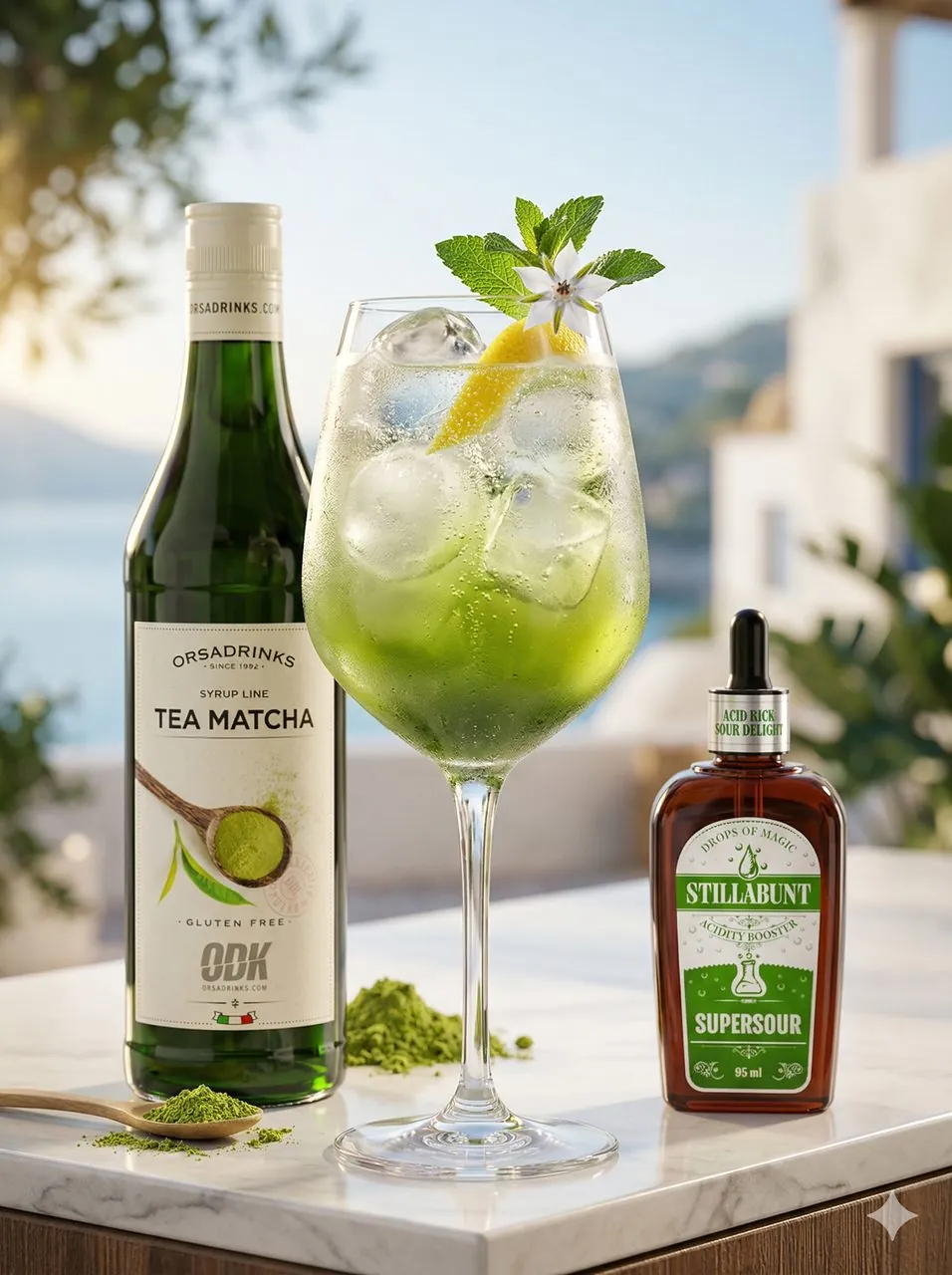
Matcha Tea Syrup. Matcha flavour in liquid format, ready to dose at bar speed. Cold-dissolving with no lumps — the key operational advantage. Use it in iced lattes, cocktails and spritz serves. One 750 ml bottle gives you approximately 50 pours at around €0.20 per 15 ml dose.
Frappé Matchamisú. Ceremonial matcha meets tiramisu in a ready-to-mix powder base. The result is a creamy, gluten-free premium serve with a high ticket price. A dessert drink that closes the afternoon shift strongly.
ODK Blend Matcha. A ready-to-mix powder for superfood lattes, hot or cold. The colour alone sells it — a green that stops people mid-scroll.
Building it into your menu
Start with an iced matcha latte: plant milk base, syrup dose, ice, green crown. Add a matcha spritz for your no/low section — syrup, sparkling water, a touch of yuzu or elderflower. Close with the Matchamisú as a dessert serve at a premium price point. Three products, one theme, clear positioning.
Ceremonial vs barista matcha
Not all matcha is equal. Ceremonial grade (first harvest, fine grind, deep green) is highest quality — complex, umami, expensive. Culinary or barista grade has a more neutral profile at lower cost, suited to milk-based drinks where extraction matters less than consistency. The ODK Matcha Tea Syrup takes the best of both: matcha flavour concentrated into a liquid format, zero prep time, no specialist knowledge required. Consistent colour and flavour in every glass.
The real numbers: costing a matcha serve
The cost-to-margin ratio is the strongest argument for matcha. An iced matcha latte uses a syrup dose, plant milk and ice. Total ingredient cost is low. At a retail price of €4.50 to €6 depending on your venue and market, this is one of the highest-margin daytime serves you can offer. Compare it to espresso: coffee costs €0.05–0.10 per cup but competes on price. Matcha, by differentiation and perceived value, commands a higher price with a comparable ingredient cost. The syrup dose alone is ~€0.20.
Three matcha serves that sell themselves
Iced Matcha Latte. The baseline. Cold plant milk, syrup, ice, green top. Works on any menu. Recommended retail: €4.50–6.
Matcha Spritz. For your afternoon and no/low section. Matcha syrup, sparkling water, yuzu or elderflower touch. Visual, refreshing, something different on a terrace menu.
Matchamisú. The premium closer. Frappé Matchamisú powder — ceremonial matcha and tiramisu in one base — is creamy, gluten-free and impossible to photograph badly. A clear differentiator in any frappé range.
Plant milk compatibility
Matcha pairs best with oat milk (creaminess and natural sweetness balance the vegetal note) and soy milk (stable texture when cold). Almond works well in cold frappé formats. If you serve a vegan or dairy-free clientele, matcha is a safe bet — it works with any plant alternative and holds its colour.
Quick answers for your team
Do we need specialist training? No. With ODK Syrup there is no ceremony, no bamboo whisk. Dose, mix, serve. It is a bar ingredient, not a Japanese tea ritual.
Does it work hot as well as cold? The cold-dissolving advantage is the syrup's main selling point. Hot matcha works too — but cold is the dominant trend and where the volume is.
Do our guests actually know what matcha is? In 2026, yes. UK and Nordic visitors — your core tourist segment in the Canary Islands — are in markets where matcha has been mainstream for several years. You are not educating them. You are giving them what they already want.