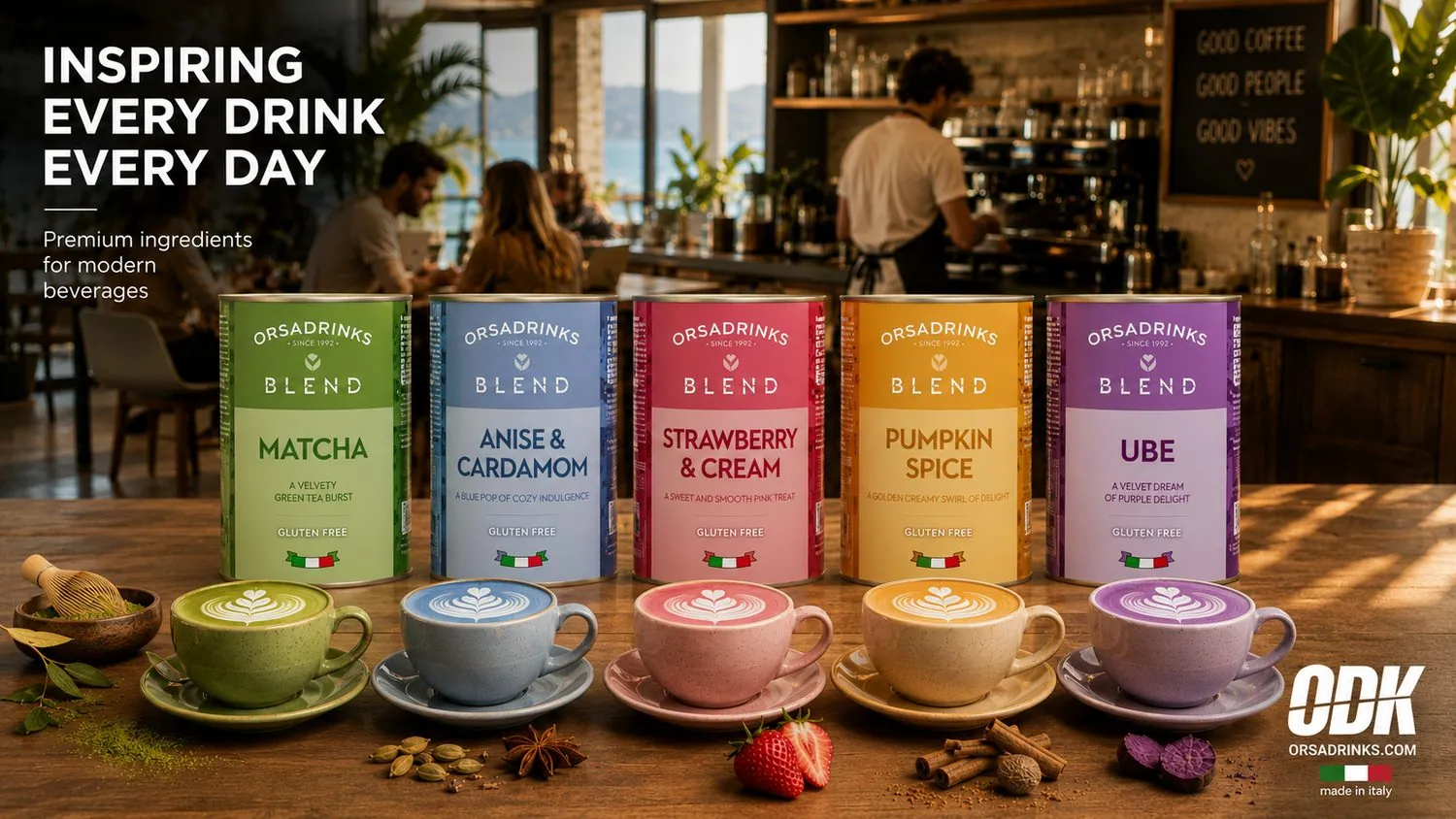
Colourful superfood lattes are among the most-shared hospitality content online. This is not a coincidence and it is not random. Here is exactly why they go viral, what the margins look like and how to implement them in your venue with minimal risk.
What is a superfood latte?
A drink built around superfood powders — matcha, açaí, ube (purple yam), pumpkin spice, turmeric — combined with milk or plant milk. The result: vibrant colour, a wellness perception that raises willingness to pay, and a novelty factor that drives sharing. Three things that reinforce each other every time a guest picks up their phone.
Why do they go viral?
Three mechanisms, all working at once. Colour: a violet latte or an emerald green one demands a photo. Instagram and TikTok algorithms favour visually striking content — and your guests are the distribution channel. Wellness perception: labelling a drink as "superfood" or "plant-based" raises willingness to pay by 20–30% versus an equivalent conventional drink. Novelty: something new gets tried, photographed and shared — free advertising from every table.
The ODK superfood ecosystem
Blend & Super Foods. Five ready-to-mix powder flavours for superfood lattes: Matcha, Anise & Cardamom, UBE, Pumpkin Spice and Strawberry & Cream. Gluten-free. Works hot or cold with any milk.
New Smoothies. Açaí & Banana and Red Fruits — real fruit pulp, ready to blend. No preservatives, no artificial colours. Serve in a glass or as a bowl with toppings.
Which superfood to implement first
1. Matcha. Lowest risk, proven demand. Your UK and Nordic guests are already looking for it. Start here.
2. Açaí. Essential for any brunch or breakfast menu. The ODK Açaí & Banana Smoothie is ready to blend — no prep complexity.
3. UBE.* The highest social media impact of the range. The purple of a UBE latte is unmistakeable. Guests who order it photograph it. Every time.
*UBE is a purple yam originally from the Philippines, known for its intensely purple colour and sweet flavour — somewhere between vanilla and hazelnut. One of the most viral ingredients in drinks and desserts globally.
4. Pumpkin Spice. Seasonal (October to December), but with high active demand during that window. A venue offering it in season captures guests who are searching specifically for it.
5. Anise & Cardamom. For the more sophisticated end of your clientele. A spiced latte with Middle Eastern inspiration — a growing trend in tourist-oriented cities.
The real numbers
A superfood latte made with ODK Blend powder carries very low ingredient cost — a dose of powder plus plant milk. On your menu at €4 to €6.50, gross margin exceeds 70% in most cases. Comparable to espresso but at a higher retail price, justified by the added perceived value. Smoothies and açaí bowls carry a higher ingredient cost (real fruit), but at €5–8 with toppings the margin holds if the bowl is presented well.
How to name them on your menu
The name matters more than you might expect. "Purple UBE Latte" outsells "purple sweet potato latte" every time. The ingredient name raises the perceived price ceiling. Add one or two benefit descriptors — "gluten-free", "plant-based", "alcohol-free" — and you have a menu line that sells without the server having to explain it. If you use a QR menu, a single well-shot photo of a UBE latte or açaí bowl converts far more than text alone.
Equipment needed
For powder-based superfood lattes (Blend range): a shaker or a bar blender. No specialist kit. For smoothies and açaí bowls: a powerful blender. That is it — no complex preparation, no additional training overhead.
Common questions
Do they work in winter? Matcha and Anise & Cardamom both have strong hot versions that work well through the cooler months. UBE hot latte is also gaining traction. Smoothies and bowls are more seasonal.
How do we get guests to order them the first time? Active table suggestion from your team on the first day. When a visually striking latte reaches one table, the surrounding tables notice and ask. The table effect with these drinks is powerful — use it.